-d2948213-1920w.png)
Landscape Lighting
- Mar 31
- 3 min read
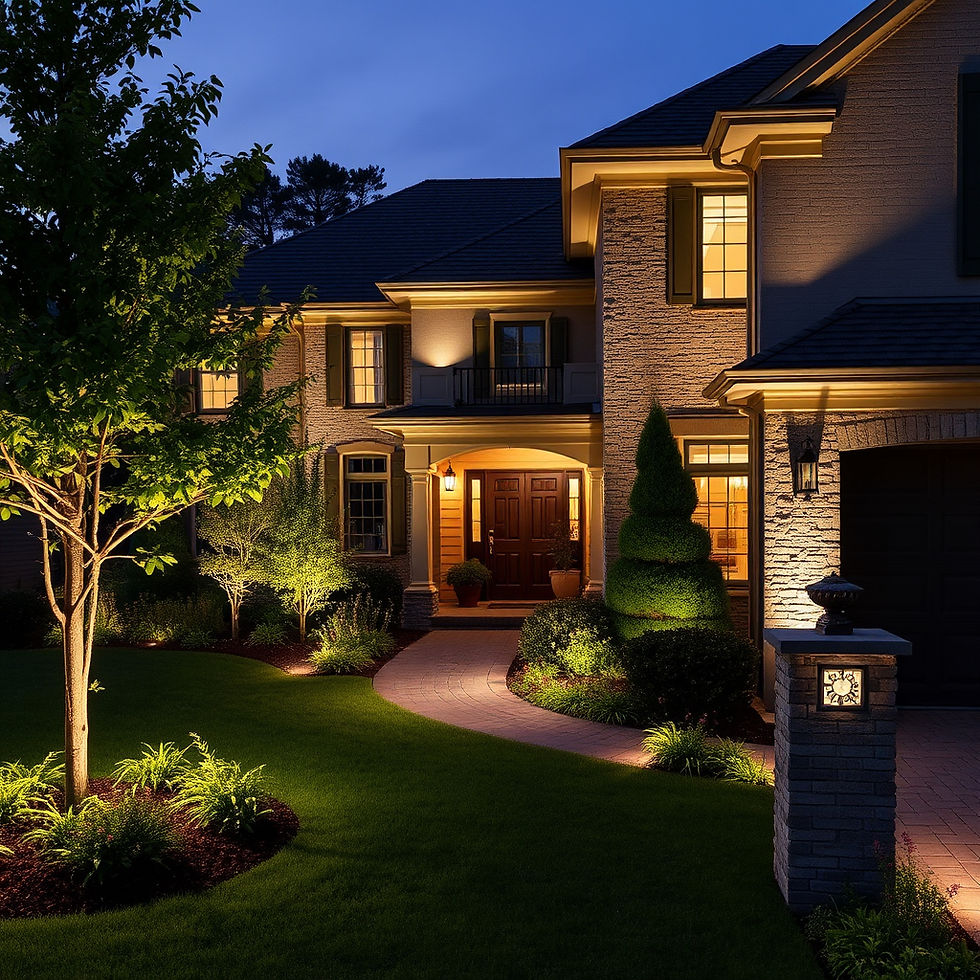
Good landscape lighting doesn't just make a yard look great at night — it extends how long you actually use your outdoor space and adds a meaningful layer of security to your property.
The pros — and a few honest cons.
The benefits of a well-designed lighting system are hard to argue with. Curb appeal after dark, safer walkways and entries, highlighted architectural features, and the ability to enjoy your patio well past sunset are all real returns on the investment. Landscape lighting also adds perceived value to a home in a way that's immediately noticeable to guests and buyers alike.
That said, there are trade-offs worth knowing upfront. A quality system requires a licensed electrician or experienced installer — this isn't a DIY-friendly project if you want it done right and to code. Poorly placed fixtures or the wrong color temperature can actually detract from a landscape rather than enhance it. And like any system with components exposed to the elements, maintenance is part of the picture. Bulbs burn out, fixtures get clipped by mowers, and timers need occasional adjusting as daylight hours shift through the seasons.
New technology has changed the game.
The biggest shift in landscape lighting over the last several years has been the widespread adoption of LED technology, and it's been almost entirely for the better. Modern LED landscape fixtures use a fraction of the energy of older halogen systems, run cooler, and last dramatically longer — often 25,000 to 50,000 hours or more. That means fewer bulb replacements and lower utility bills over the life of the system.
Smart lighting controls have also become a standard offering rather than an upgrade. Timers, dusk-to-dawn sensors, and app-based controls let homeowners adjust schedules, dim zones, and even change color temperature from their phone. Some systems now integrate directly with smart home platforms like Google Home or Alexa. For larger properties, low-voltage systems with transformer hubs make it easier than ever to expand a lighting plan as a landscape evolves. The technology has gotten genuinely good — and the install options have gotten more flexible along with it.
What to expect on cost.
Landscape lighting spans a wide range depending on scope, fixture quality, and the complexity of the electrical work involved. A basic entry-level system — a handful of path lights and a couple of uplights on a small front yard — might run $500 to $1,500 installed. A mid-range system covering a full front and back yard with quality brass or cast aluminum fixtures, a smart transformer, and professional design typically falls in the $3,000 to $8,000 range. Larger or more elaborate installs on bigger properties, with extensive tree lighting, architectural accents, and multiple zones, can run well beyond that.
The biggest cost variable is fixture quality. Budget fixtures made from plastic or thin-gauge materials will corrode, fade, and fail faster in Central Texas heat and UV exposure. Investing in commercial-grade brass or solid aluminum fixtures costs more upfront but pays off in longevity and appearance over time. It's one of those categories where the cheapest option often ends up being the most expensive in the long run.
Landscape lighting is one of the highest-impact upgrades you can make to an outdoor space. When it's designed with intention and installed with quality components, it transforms a property — morning and night.


